Lei Sha
Professor and PhD Supervisor · School of Artificial Intelligence, Beihang University
The First Workshop·AACL-IJCNLP 2026
Co-located with AACL-IJCNLP 2026 in Hengqin, China, on Tuesday, November 10, 2026.
Join six invited speakers, three contributed oral presentations, and open discussion.
November 10, 2026 · 09:00–17:30 · Beijing time (UTC+8)
Please review our Code of Conduct and reporting information before attending.
AI agents are crossing a consequential threshold: from assisting with isolated research steps to running closed loops of literature search, hypothesis generation, coding, experimentation, evaluation, and revision. Whether those loops compound into recursive self-improvement, a claim often tied to artificial superintelligence, is prominent but unsettled, and it calls for measurement rather than assumption.
ARRSI asks what can actually be measured. We treat as open the claims most often made on an agent’s behalf: that its hypotheses are genuinely novel, that its gains reflect research ability rather than benchmark overfitting or undisclosed human labor, and that improvements derived from its own runs persist. Each becomes tractable only through reportable evidence: held-out results, attribution of a gain to the component that changed, budgets for compute and human intervention, and controls for contamination and reward tampering.
The question is no longer speculative. Research agents now synthesize literature, propose hypotheses that have been taken into laboratory testing, and run closed research loops: proposing an idea, implementing it, running an experiment, evaluating the result, and choosing the next attempt. What this establishes is contested: it shows that generated hypotheses can be worth testing, not that novelty has been measured.
Self-improvement also reaches training: models generate practice data, rewards, curricula, and critiques through self-play, self-reward, and verifiable task generation, and agentic data systems improve the datasets they create. This broadens AI-for-AI to data curation, pretraining, midtraining, post-training, and systems optimization. Yet full recursive self-improvement remains unproven; evaluation must expose overfitting, hidden human labor, and reward tampering.
ARRSI fits AACL-IJCNLP because language is how research agents form hypotheses, retrieve multilingual evidence, call tools, critique claims, and explain results. The workshop brings together NLP, agentic systems, AI for Science, AI for AI, evaluation, and governance to establish definitions, benchmarks, reporting standards, and safety boundaries for systems that do not merely produce research-like text, but accumulate auditable evidence and use it to become better researchers.
We invite empirical, theoretical, systems, dataset, benchmark, survey, and position papers on the following topics.
Prompts, context, memory, tools, workflows, evaluators, and harness code.
Literature synthesis, hypotheses, experiments, analysis, replication, peer review, and research taste.
Mathematics, physics, chemistry, biology, medicine, and materials science.
Models, agents, architectures, objectives, optimizers, kernels, compilers, training, inference, alignment, and evaluation.
Discovery, collection, cleaning, filtering, annotation, synthesis, provenance, and quality control.
Pretraining, midtraining, post-training, self-play, rewards, curricula, and continual learning.
Coding and general agents, plus finance, healthcare, medicine, education, and other domains.
Experiment managers, sandboxes, verifiers, provenance, checkpoints, rollback, compute accounting, benchmarks, and contamination control.
Validity, attribution, negative results, reward hacking, oversight, security, dual use, and human control.
| Important dates | |
|---|---|
| Call for papers released | September 1, 2026 |
| Submission deadline | October 31, 2026, 4:59 AM PDT |
| Notification of acceptance | Updated date to be announced |
| Camera-ready papers due | November 9, 2026, 23:59 (UTC+8) |
| Proceedings due (organizers) | Updated date to be announced |
| Workshop day | Tuesday, November 10, 2026 |
| Time | Session | Speaker / Details |
|---|---|---|
| 09:00–09:10 | Opening Remarks | Welcome, logistics, and Code of Conduct reminder |
| 09:10–09:50 | Invited Talk 1Recursive Self-Improvement for Trustworthy AI and Scientific Discovery | Lei Sha |
| 09:50–10:30 | Invited Talk 2DeltaHarness: Measuring Recursive Self-Improvement in Tool-Using Agents | Chenyang Lyu |
| 10:30–11:00 | Coffee Break | |
| 11:00–11:40 | Invited Talk 3Self-Improving Agents through Harness and Skill Evolution | Zhongxiang Dai |
| 11:40–11:55 | Oral Presentation 1Curated to Win: Certifying Reward-Model and Judge Selection Against Evaluation-Set Curation | Adrian Erlikhman |
| 11:55–12:10 | Oral Presentation 2StepDiff: Measuring Patch Recovery Along Real Repository Histories | Wei Zhang |
| 12:10–12:30 | Open Discussion | Discussion with speakers and participants |
| 12:30–14:00 | Lunch Break | |
| 14:00–14:40 | Invited Talk 4Retrieval for RSI: From LLM to World | Chenghao Xiao |
| 14:40–15:20 | Invited Talk 5Knowing, Retrieving, Grounding: Verification Primitives for Self-Improving Research Agents | Hou Pong (Ken) Chan |
| 15:20–15:30 | Discussion / Buffer | Discussion and session transition |
| 15:30–16:00 | Coffee Break | |
| 16:00–16:40 | Invited Talk 6Evaluating LLM Agents: Outcomes, Processes, and Open-Ended Research | Linyi Yang |
| 16:40–16:55 | Oral Presentation 3CodeTracer: Towards Traceable Agent States | Han Li |
| 16:55–17:25 | Open Discussion | Discussion with speakers and participants |
| 17:25–17:30 | Closing Remarks | Summary and next steps |
Invited talks: 35 minutes for the talk and 5 minutes for Q&A. Oral presentations: 12 minutes for the talk, 2 minutes for Q&A, and 1 minute for transition.
Online access details will be sent to registered participants on November 9. Zoom links must not be shared publicly.
Professor and PhD Supervisor · School of Artificial Intelligence, Beihang University
Staff Research Scientist and Tech Lead · ATH-MaaS AI, Alibaba Group
Assistant Professor and Presidential Young Fellow · School of Data Science, The Chinese University of Hong Kong, Shenzhen
Assistant Professor · School of Computing and Artificial Intelligence, Shanghai University of Finance and Economics
Assistant Professor · Department of Artificial Intelligence, University of Macau
Assistant Professor and Ph.D. Supervisor · Southern University of Science and Technology (SUSTech)

University of British Columbia · Vector Institute
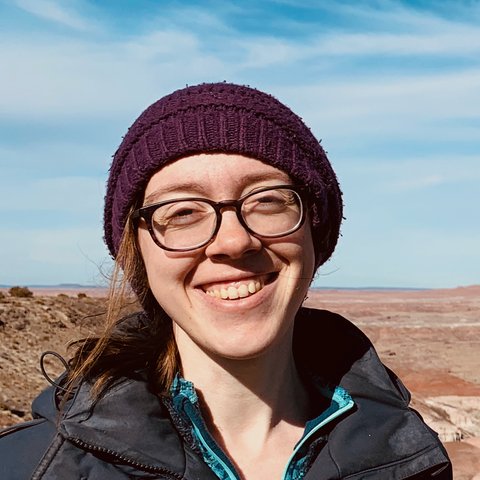
University of British Columbia · Vector Institute

University of British Columbia

University of Manchester
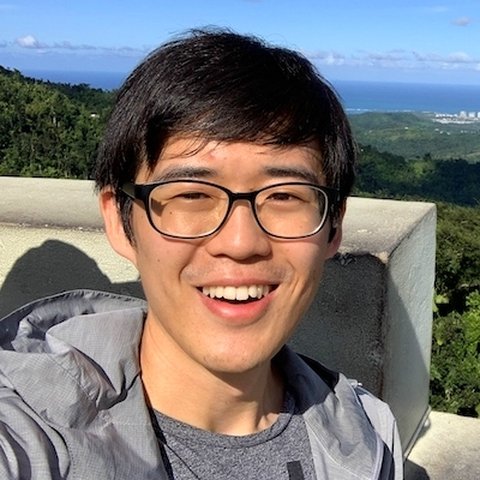
Google AI Research

King’s College London

NVIDIA Research
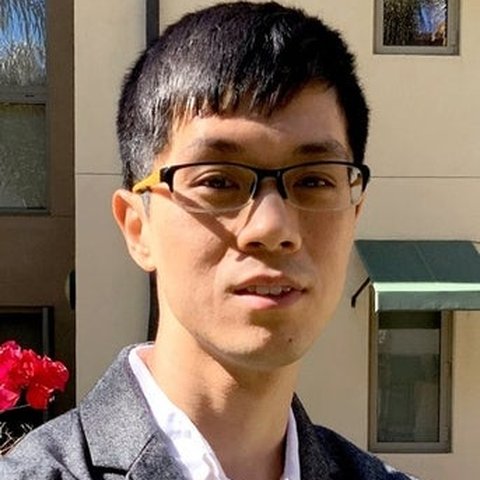
Meta Superintelligence Labs · University of Waterloo
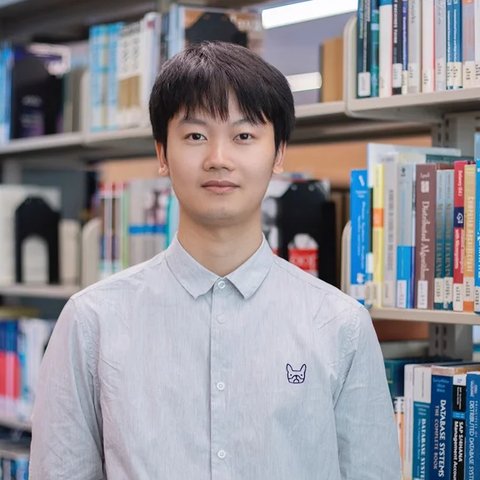
Recursive Superintelligence

M-A-P

M-A-P

Langboat

Amazon AWS AI Lab
The organizing team spans North America, Europe, Asia, and the Middle East. Conflicted organizers take no part in assignments, discussion, or decisions.

Arizona State University

Meta Superintelligence Labs · USA

OpenAI · USA

UCLA

University of Manchester

Monash University · CSIRO Data61

TokenWave.AI · M-A-P
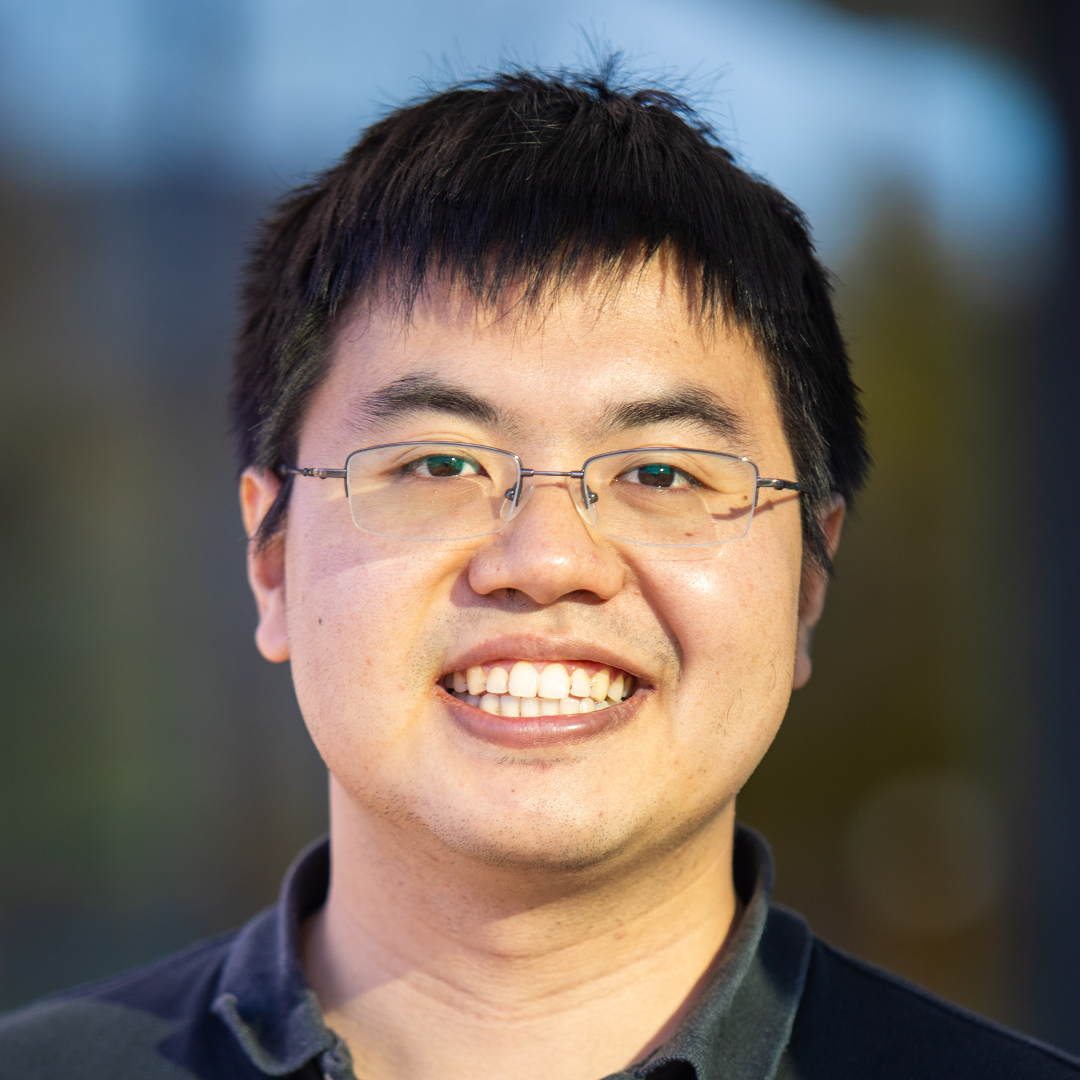
Assistant Professor · Harvard University

Meta · London

Associate Professor · Columbia University, USA
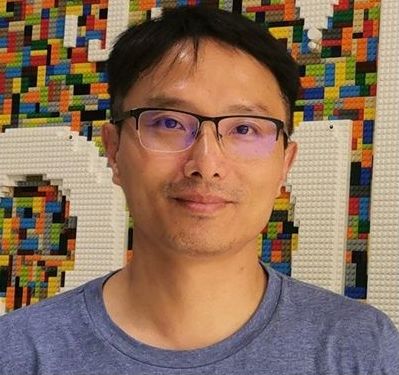
Professor · University of California, San Diego
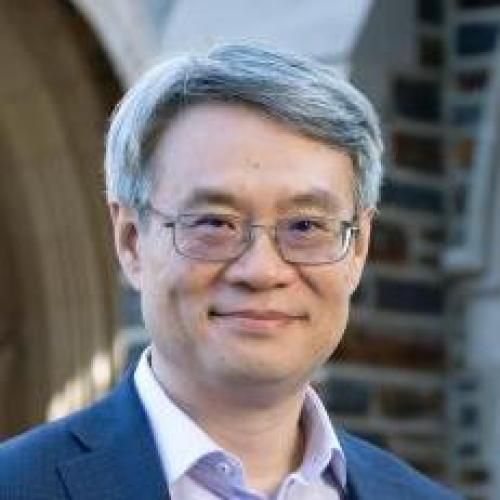
Professor · Duke University

Caltech / TikTok

UC Santa Cruz
Reviewing runs on OpenReview with double-blind submission, discussion, and decisions. We target at least 60 reviewers so that every submission receives three reviews while individual loads stay at three papers or fewer. The reviewer list will be announced once finalized. Reviewers assess evidence traceability, controls, reproducibility, resources, safety, and limitations; undisclosed AI-generated reviews are prohibited.
Authors of accepted papers should submit their camera-ready revisions on OpenReview by November 9, 2026, 23:59 Beijing time (UTC+8).
Sign in using an author account, open your accepted paper, and select Camera Ready Revision. Upload the final non-anonymous PDF, provide the requested source files, and complete the author and presentation information on the form.
We plan to submit the final camera-ready papers for ACL Anthology proceedings. Authors must ensure that each paper is covered by the required conference registration.
ARRSI 2026 follows the ACL Anti-Harassment Policy.
We expect respectful participation in all workshop sessions and related online discussions. Harassment and hostile conduct are not acceptable.
Please also read the AACL-IJCNLP 2026 Code of Conduct.
This policy applies to all workshop participants, both in person and online. We will briefly remind participants of the policy and reporting routes during our opening remarks.